

Hey, guys! Welcome to this video on pH levels.
What is pH?
The pH value of a solution is a measure of its acidity. Most solutions have a pH value between 0 and 14 on the pH scale.
Solutions with a pH value of 7, at the middle of the pH scale, are called neutral. If a solution has a pH value smaller than 7, it’s called acidic. If the pH value is larger than 7, the solution is called basic or alkaline.
For instance, vinegar has a pH value of 2.4 and is acidic, pure water has a pH value of 7 and is neutral, and household bleach has a pH value of 13 and is basic.
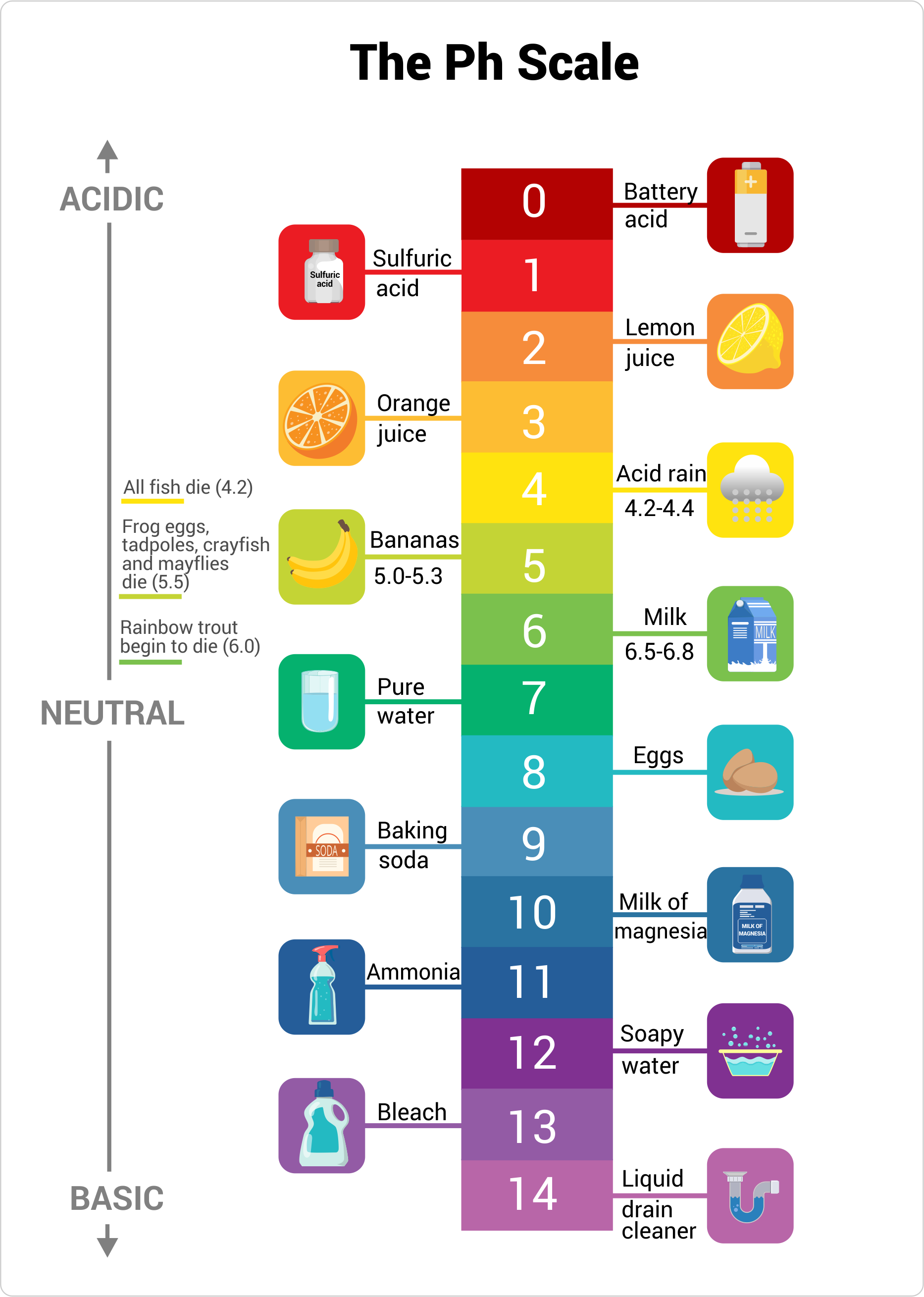
pH Acidity
Note a solution that is more acidic has a smaller pH value. That has to do with the definition of pH. Generally, the acidity of a solution is defined by the concentration of hydronium ions in it. The higher the concentration of hydronium ions, the more acidic the solution. For instance, a solution with a 0.5 M concentration of hydronium ions is more acidic than a solution with a 0.05 M concentration of hydronium ions.
Real-World Examples
Let’s look at a few common substances and where they fall on the pH scale.
- Battery acid, a very corrosive substance, is a strong acid, therefore it falls on the lower end of the pH scale with a pH of approximately 1.
- The gastric juices in your stomach, which help you to digest food, are acidic, too, with a pH value somewhere between 1.5 and 3.
- Lemon juice contains a citric acid and has a pH value of 2 to 3, just like vinegar.
- Most soft drinks are quite acidic with pH values between 2.5 and 4. This is one of the reasons dentists don’t want you to drink soft drinks: the acid in soft drinks dissolves the enamel of your teeth. Milk is a lot better for your teeth, with a pH of approximately 6.5.
- Rainwater is somewhat acidic, with a pH of approximately 5. However, industrial pollutants can make rainwater more acidic, with a pH value anywhere between 2 and 4, which can be damaging to plant life.
- Pure water is neutral with a pH of 7.
- Blood is slightly basic, with a pH value of 7.4.
- Seawater has a pH value of approximately 8.
- Solutions of baking soda are mildly basic with a pH value of 8.4, therefore baking soda is used to clean up small acid spills in chemistry labs.
- Soapy water has a pH value of 9 to 10, which helps to remove the grease from your skin or from dirty dishes.
- Just as strongly acidic solutions pose hazards, so does strongly basic solutions. Lye, oven cleaner, and household bleach have a pH value of approximately 13, so be careful around them.
Thanks for watching this overview of pH levels. See you guys next time!
Frequently Asked Questions
What is pH?
pH is a measure of how acidic or basic an aqueous solution is based on the amount of hydrogen ions in the substance.
What does pH stand for?
pH stands for “potential of hydrogen.”
What is pH balance?
pH balance refers to the levels or ratio of acids and bases in your body at which your body functions best.
What is the pH of water?
The pH of pure water is 7, which is considered neutral.
How do you calculate pH?
To calculate a solution’s pH you must know the concentration (molarity) of hydronium ions (H3O+). From there you multiply −log10 by the molar hydrogen ion concentration.
What does pH measure?
pH measures how acidic or basic a solution is based on its hydrogen ion content.
What is a pH scale?
The pH scale is a range from 0 to 14 used to interpret the acidity or basicity of an aqueous solution. 7 is considered neutral, while values above 7 are basic and values below 7 are acidic.


