The Medical Laboratory Technician (MLT) exam is offered by the ASCP Certification Board as a way to obtain MLT certification. Earning your MLT certification demonstrates your dedication, professionalism, and preparation as a medical laboratory technician.
Click “Start Test” above to take a free MLT practice test, and check out our premium-quality MLT test prep resources by clicking the links below!
Eligibility
To qualify for the MLT exam, you must meet all requirements for one of the three routes below. ASCP discontinued Route 2, which required CLA(ASCP) certification, on January 1, 2023.
You need an associate degree or at least 60 semester hours (90 quarter hours) from a regionally or nationally accredited college or university.
You must also have successfully completed an MLT program accredited by NAACLS or ABHES within the last five years.
You need an associate degree or at least 60 semester hours (90 quarter hours) from a regionally or nationally accredited college or university. Your coursework must include at least 6 semester hours (9 quarter hours) each in biology and chemistry. These science credits may be earned as part of your degree or separately.
You must also have successfully completed a 50-week U.S. military medical laboratory training course within the last ten years.
You need an associate degree or at least 60 semester hours (90 quarter hours) from a regionally or nationally accredited college or university. Your coursework must include at least 6 semester hours (9 quarter hours) each in biology and chemistry. These science credits may be earned as part of your degree or separately.
You must also have three years of acceptable full-time clinical laboratory experience within the last six years. Your experience must cover blood banking, chemistry, hematology, microbiology, immunology, and urinalysis/body fluids. You need experience in every area, but not three full years in each.
The laboratory must hold a qualifying CMS CLIA or DoD CLIP certificate, JCI accreditation, or ISO 15189 accreditation.
One year of the experience requirement may be replaced by successful completion, within the last five years, of a NAACLS-accredited MLS program, a NAACLS- or ABHES-accredited MLT program, or a foreign medical laboratory science clinical training program.
MLT Exam Outline
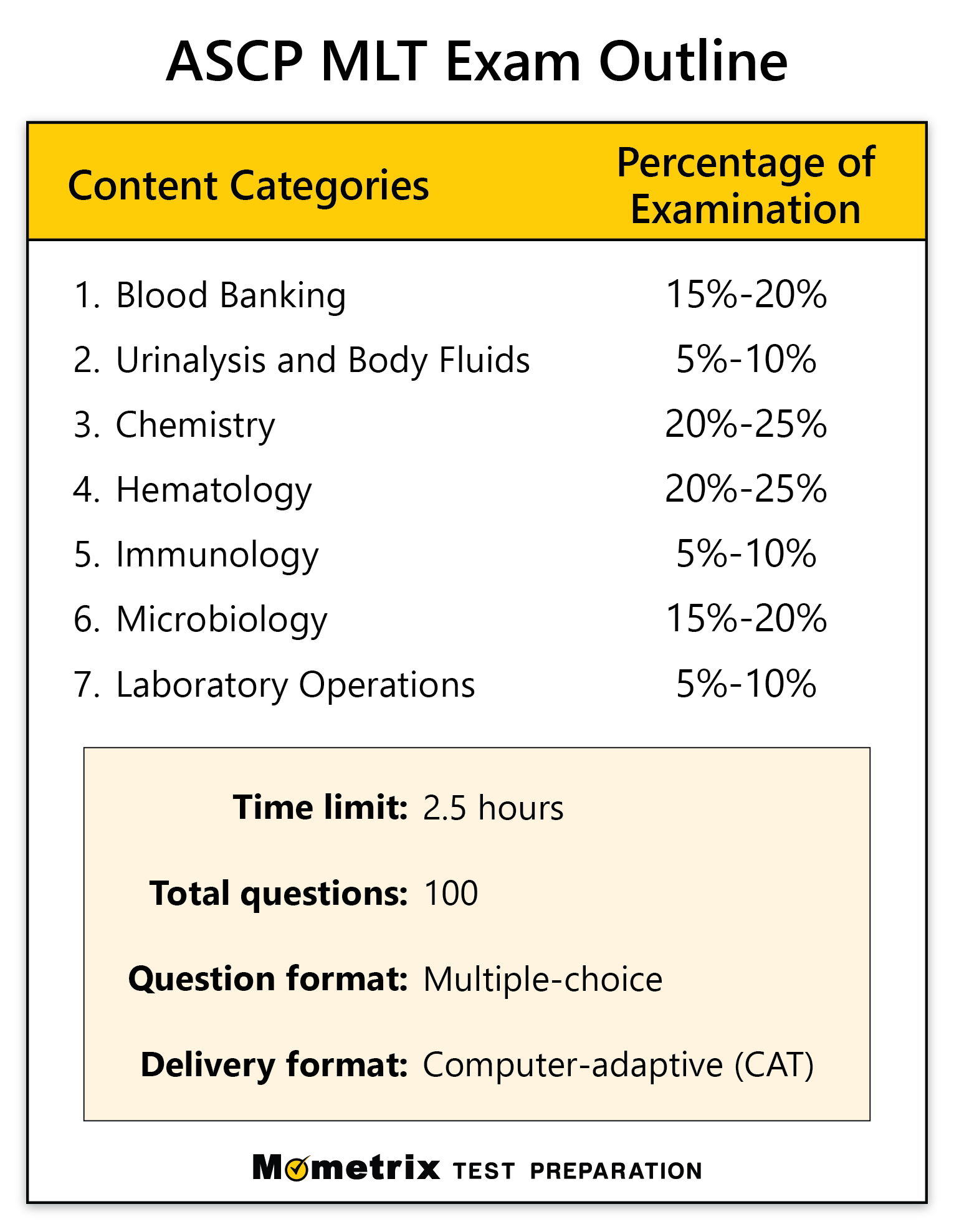
The MLT exam contains 100 multiple-choice questions and has a time limit of 2.5 hours.
This exam is a computer-adaptive test (CAT), so depending on your performance, the difficulty of your test will increase or decrease as you go on.
Here’s a look at how it works:
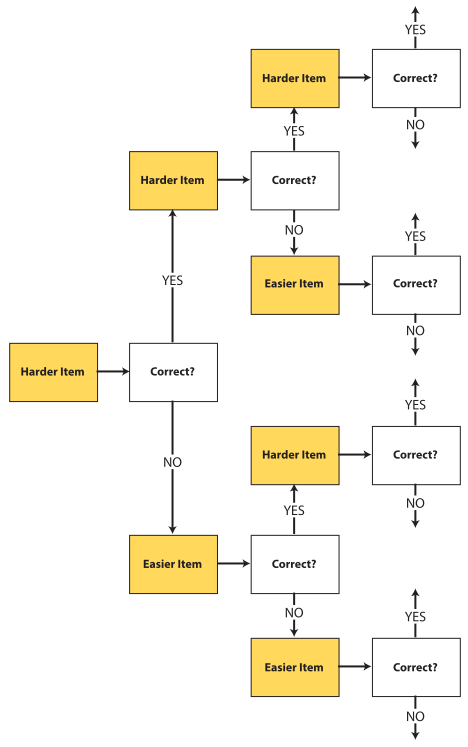
The first question is judged to be of medium difficulty, and depending on your performance, the next question may be easier or harder. If you do well on the first question, the second question will be harder; conversely, if you do poorly on the first question, the second question will be easier.
1. Blood Banking (15%-20%)
These questions assess your knowledge of blood products, group systems, immunology, physiology and pathophysiology, serologic and molecular testing, and transfusion practice.
I. Blood Products
- Donors
- Processing
- Storage
- Blood components
- Blood component quality control
II. Blood Group Systems
- Genetics
- Antigens/Biochemistry
- Role of blood groups in transfusion
III. Blood Group Immunology
- Immune response
- Immunoglobulins
- Antigen-antibody interactions
- Complement
IV. Physiology and Pathophysiology
- Blood physiology
- Coagulation and hemostasis
- Fetus and newborn hemolytic disease
- Anemias
- Transplantation
V. Serologic and Molecular Testing
- Routine tests
- Reagents
- Application of reagents and special tests
- Platelet/Leukocyte testing
- Quality assurance
VI. Transfusion Practice
- Indications for transfusion
- Component therapy
- Adverse transfusion effects
- Apheresis and extracorporeal circulation
- Blood administration
- Patient blood management
2. Urinalysis and Body Fluids (5%-10%)
These questions assess your knowledge of physical and chemical testing, microscopic analysis, physiology, and disease states.
I. Urinalysis
- Physical
- Microscopic
- Chemical
- Renal physiology
- Disease states
II. Body Fluids
- Physical
- Microscopic
- Chemical
- Physiology
- Disease states
3. Chemistry (20%-25%)
These questions assess your knowledge of carbohydrates, lipids, heme derivatives, enzymes, proteins, and other nitrogen-containing compounds. Additional topics include acid-base determinations, electrolytes, endocrinology, vitamins and nutrition, therapeutic drug monitoring, and toxicology.
I. General Chemistry
- Carbohydrates
- Heme derivatives
- Lipids
II. Proteins and Enzymes
- Proteins and other nitrogen-containing compounds
- Enzymes
III. Acid-base, Blood Gases, and Electrolytes
- Acid-base determinations
- Electrolytes
IV. Special Chemistry
- Therapeutic drug monitoring
- Endocrinology
- Toxicology
- Vitamins and nutrition
4. Hematology (20%-25%)
These questions assess your knowledge of physiology, disease states, laboratory testing, and hemostasis (including physiology, disease states, and laboratory determinations).
I. Hematology Physiology
- Function
- Production
- Destruction
II. Hematology Disease States
- Leukocytes (WHO classification)
- Erythrocytes
- Platelets
III. Hematology Laboratory Testing
- Hemoglobin
- Cell counts
- Flow cytometry immunophenotyping
- Differentials and morphology evaluation
- Molecular and cytogenetic testing
- Hematocrit
- Indices
- Special stains
- Hemolytic indicators
- Other studies
IV. Hemostasis
- Disease states
- Physiology
- Laboratory determinations
5. Immunology (5%-10%)
These questions assess your knowledge of immunology principles, immune system diseases, transplantation, infectious disease serology, serologic procedures, and test results.
I. Principles of Immunology
- Immunoglobulins
- Immune system physiology
- Antigen-antibody interactions
- Complement
II. Diseases of the Immune System
- Hypersensitivity
- Immunodeficiency
- Autoimmunity
- Immunoproliferative diseases
III. Transplantation
- HLA typing
- Graft-vs-host disease
- Tumor immunology
IV. Infectious Disease Serology
- Stages of infection of Treponema pallidum and Borrelia burgdorferi
- Clinical significance and epidemiology of viral pathogens
- Tuberculosis infection
V. Serologic Procedures
- Rheumatoid factor
- Cytokine testing
- ANA
- Immunofluorescence
- Thyroid antibodies
- Nontreponemal syphilis testing
- Labeled immunoassays
- Treponemal syphilis testing
VI. Test Results
- Interpretation
- Confirmatory testing
- Disease state correlation
6. Microbiology (15%-20%)
These questions assess your knowledge of pre-analytic procedures, analytic procedures for bacteriology, and analytic procedures for mycobacteriology, virology, parasitology, and mycology, and post-analytic procedures.
I. Preanalytic Procedures
- Specimen collection and transport
- Specimen processing
- Stain procedures, principles, and interpretations
II. Analytic Procedures for Bacteriology
- Cerebrospinal fluid
- Upper respiratory
- Lower respiratory
- Blood and bone marrow
- Body fluids from normally sterile sites
- Genital tract
- Antimicrobial susceptibility testing and antibiotic resistance
- Gastrointestinal
- MRSA/MSSA, VRE, ESBL/CRE screening
- Skin, soft tissue, and bone
- Urine
- BSL-3 pathogens and select agents (bioterrorism)
- Identification methods
III. Analytic Procedures for Mycobacteriology, Virology, Parasitology, and Mycology
- Mycobacteriology and Nocardia spp.
- Virology
- Parasitology
- Mycology
IV. Postanalytic Procedures
- Documentation practices
- Critical and urgent value reporting
- Result review and autoverification
- Issuing corrected reports
- Reporting to infection control/prevention and public health
7. Laboratory Operations (5%-10%)
These questions cover quality assessment and troubleshooting, safety, laboratory mathematics, and manual and automated methodology and instrumentation.
I. Quality Assessment/Troubleshooting
- Preanalytical, analytical, and postanalytical
- Point-of-care testing
- Regulation
- Quality control
- Compliance
II. Safety
- Safety programs and practices
- Emergency procedures
III. Laboratory Mathematics
- Standard curves
- Sensitivity, specificity, and predictive value
- Molarity and normality
- Mean, median, mode and confidence intervals
- Concentration, volume, and dilution
IV. Manual and Automated Methodology and Instrumentation
- Basic laboratory equipment
- Osmometry
- Nephelometry
- Electrophoresis
- Flow cytometry
- Spectrophotometry and photometry
- Chromatography
- Fluorometry
- Mass spectrometry
- Electrochemistry
- Molecular methods
- Hematology instrumentation
- Automated microbiology processors
Check Out Mometrix's MLT Study Guide!
Get practice questions, video tutorials, and detailed study lessons.
How to Pass
Think you aren’t a good test-taker? Maybe on a study-time crunch? Or just don’t know how to begin studying? Mometrix has designed a new Study Secrets course to help every student, no matter what study scenario you are in. Here’s what you’ll find in the Study Secrets Course:
- Techniques to Conquer Procrastination
- Steps to building a Study Plan custom to your learning style
- 7 Effective Note-Taking Methods
- Test-Taking Tips
- Memory Techniques and Mnemonics
- And much more!
Everyone learns differently, so we’ve tailored our Study Secrets Course to ensure every learner has what they need to prepare for their upcoming exam or semester. Click below to check it out!
Registration
To register for the MLT exam, start by applying online through your ASCP account. You'll need to submit the documentation required for your eligibility route and pay the nonrefundable $235 application fee. Arrange for any required official transcripts to be sent to ASCP.
After ASCP approves your eligibility, you’ll receive an email directing you to your Admission Notification. Use those instructions to schedule your exam at an approved Pearson testing center within your eligibility period.
Test Day
You should arrive at the testing center 30 minutes before your exam is scheduled to begin. Bring an accepted, unexpired ID containing your photograph and signature, and make sure that your first and last names match those on your Admission Notification. During check-in, Pearson will collect your signature, photograph, and palm-vein image.
In general, avoid bringing any personal items with you, such as a cell phone, pencils, bags, hats, etc.
How the Test is Scored
You can view your preliminary pass/fail result when you finish the exam. ASCP normally emails instructions for accessing your official score report within four business days, provided your required official transcripts have been received and processed.
Keep in mind that you are not credentialed until your passing score report is available.
The score you need to pass the exam is 400.
Check Out Mometrix's MLT Flashcards!
Get complex subjects broken down into easily understandable concepts.
Study Tips
Start with an MLT Practice Test
Before creating your study schedule, take an MLT practice test to establish a starting point. You don't need to wait until you have reviewed every blood group, chemistry analyte, blood cell abnormality, or microorganism. At this stage, the goal is to identify where your preparation time will have the greatest effect.
Review your results across the seven content areas:
- Blood Banking: Can you apply blood group systems, antibody identification, compatibility testing, blood-component selection, transfusion practices, and reactions?
- Urinalysis and Other Body Fluids: Can you connect physical, chemical, and microscopic findings with physiology and disease states?
- Chemistry: Can you interpret results involving carbohydrates, electrolytes, enzymes, proteins, acid-base balance, endocrinology, therapeutic drugs, and toxicology?
- Hematology: Can you recognize normal and abnormal blood-cell findings, correlate results with disease states, and interpret coagulation testing?
- Immunology: Do you understand immune-system principles, serologic procedures, infectious-disease testing, and how to interpret test results?
- Microbiology: Can you use specimen information, morphology, staining, culture characteristics, and biochemical or other testing to identify microorganisms?
- Laboratory Operations: Can you apply quality-control principles, troubleshoot instruments and methods, perform laboratory calculations, and follow safety requirements?
Identifying those specific weaknesses will show you where to devote more attention during your study time.
Review Difficult Questions
After each practice session, review every question you answered incorrectly AND every question you guessed on or answered with low confidence.
For each difficult question, determine which of the following caused the problem:
- You knew the laboratory value but didn't understand what could cause it to increase or decrease.
- You recognized an abnormal result but couldn't connect it to the likely disease process.
- You confused two organisms or lab methods with similar characteristics.
- You selected the correct test but interpreted the result incorrectly.
- You overlooked a specimen-collection problem that could affect the result.
- You made an error in a laboratory calculation.
- You knew a testing procedure but didn't recognize the appropriate quality-control step.
- You focused on one abnormal result instead of considering the patient's results as a pattern.
Then, outline a specific plan for improvement based on what you discovered. In other words, don't just say, “I need to study hematology.” Note that you need to practice distinguishing microcytic anemias using RBC indices, morphology, and iron-study results.
Similarly, replace “study microbiology” with something specific, such as distinguishing gram-negative enteric organisms using colony characteristics and biochemical reactions.
Utilize Answer Explanations
Answer explanations are an underutilized studying resource. To take full advantage of them, read the explanation for every question you found difficult, including questions you answered correctly.
For each one, make sure you can confidently explain:
- Why the correct answer is correct
- Why each incorrect answer is less appropriate
- What lab principle or disease process is being tested
- Which patient result or laboratory finding controls the answer
- What the laboratory professional should do next
- How the same principle could appear with a different specimen, result pattern, or patient condition
For patient-result questions, don't stop after identifying the abnormal value. Determine how the results relate to one another and what physiological or disease process could produce that pattern.
For procedural questions, reconstruct the workflow. Identify the specimen requirements, testing method, expected result, quality-control requirements, and what should happen if the result or control is unacceptable.
Study Laboratory Results as Patterns
The MLT exam doesn't only test whether you know normal ranges or isolated facts. Practice connecting laboratory findings to one another and to the patient's condition.
Use this process:
Patient Information → Test Results → Pattern → Likely Cause → Next Laboratory Step
For example, don't memorize individual RBC indices without connecting them. Use the hemoglobin, hematocrit, MCV, MCHC, RDW, morphology, and other relevant results together to determine what type of anemia the pattern suggests.
Apply the same approach in chemistry. Instead of memorizing individual liver, renal, or endocrine tests, practice recognizing how related analytes change together and what those relationships suggest.
FAQs
How many questions are on the MLT exam?
There are 100 multiple-choice questions on the exam.
How long is the MLT exam?
The time limit for the exam is 2.5 hours.
What is the passing score for the MLT exam?
You’ll need a final score of at least 400 to pass.
How much is the MLT exam?
The cost of the exam is $235.

Mometrix Test Preparation is not affiliated with or endorsed by any official testing organization. All organizational and test names are trademarks of their respective owners.