

The Social Studies section of the GED® tests your ability to analyze historical events and arguments, read for meaning in social studies, and use numbers and graphs in social studies contexts. To help you prepare for this section of the GED, this page contains everything you need to know, including what topics are covered, how many questions there are, and how you can study effectively.
Click “Start Test” above to take a free GED Social Studies practice test!
What’s on the GED Social Studies Test?
GED Question of the Day
GED Social Studies Practice Questions
One of the best ways to test your knowledge is by taking a practice test. Evaluate your social studies knowledge by trying your hand at the three practice questions below!
Answer each question and read through the answer explanation, whether you got the answer right or wrong. This will help you ensure you’ve got the topic mastered.
Whether you struggled with these questions or aced them on your first try, be sure to take the full practice test to get a better idea of how prepared you really are!
1. Read the passage below before answering the question:
 Read Passage
Once the bill is introduced to the full chamber, it is discussed and debated. Amendments can be proposed. Once the debate has ended, the chamber votes on the bill. If the majority of the chamber is in favor, the bill will advance. When a bill is approved by either the Senate or House of Representatives, it then goes to the other house for debate and approval. If either house fails to pass the bill, it will die. If the bill is passed by both houses of Congress, it goes forward to the final phase, in which the president acts on the bill.
Once the bill reaches the president, it becomes law either if he immediately signs it or if he lets it sit 10 days without signing it. If Congress adjourns before 10 days have passed, and the president has not signed the bill yet, it will not become law. This cannot be overridden. The president also has the option of vetoing the bill. If this happens, the bill will be sent back to Congress. Congress can either revise the bill and try to get it passed again, or they can override the president’s veto with two-thirds of their votes in favor of the bill in both houses.
Suppose a bill called H.R.4365 is introduced. What are the next three steps that the bill could follow?
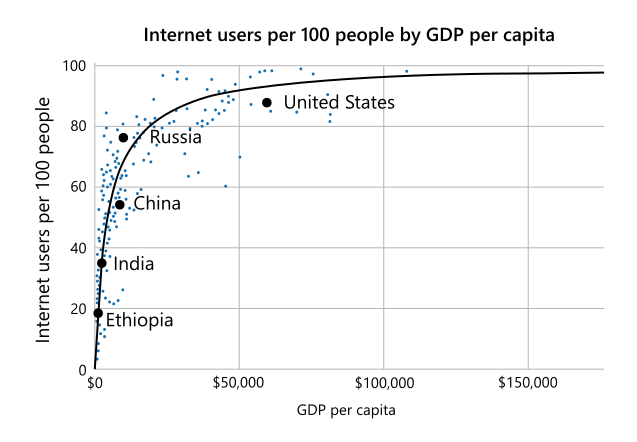
2. According to the chart below, what level of internet usage has the strongest effect on GDP?
3. Which of the following best characterizes the artist’s opinion of the topic of this political cartoon?
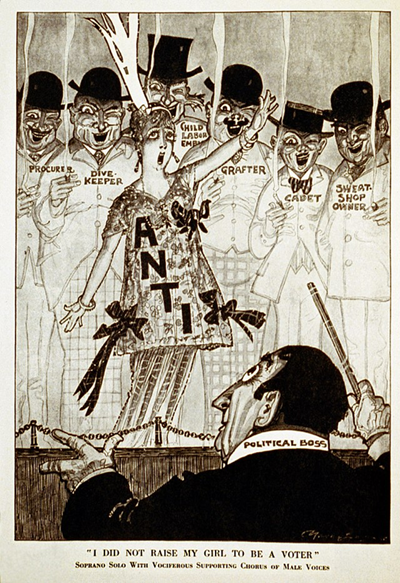
The caption also emphasizes that the male chorus of poor labor practices supports the female soloist who does not vote. Therefore, it can be concluded that the artist believes, unlike the people in the cartoon, that women should be allowed to vote.

GED Test Online Prep Course
If you want to be fully prepared, Mometrix offers an online GED prep course designed to give you everything you need to succeed!
Here’s what you’ll find in the GED course:
- 90+ Review Lessons Covering Every Topic
- Over 2,100 GED Practice Questions
- 300+ Digital Flashcards
- 400+ Instructional Videos
- Money-back Guarantee
- Mobile Access
Everyone learns differently, so we’ve tailored the GED online prep course to ensure every learner has what they need to prepare for the GED exam.
Click below to check it out!
FAQs
Q
Who is eligible to take the GED Social Studies Test?
A
The eligibility requirements for the GED Social Studies test, as well as the other GED tests, are listed below.
- You have to be at least 16 years old
- You are not enrolled in high school
- You have not graduated from high school
- You meet all of your state’s additional requirements
Q
How much is the GED Social Studies Test?
A
The GED Social Studies test fees vary with each state. The test fee typically ranges from $3.75 to $30. (Prices are usually less than $30).
Q
How long is the GED Social Studies Test?
A
The GED Social Studies test is 70 minutes (1 hour and 10 minutes). There are no breaks during this exam.
Q
How many questions are on the GED Social Studies Test?
A
The number of questions on the GED Social Studies test varies with each state.
Q
What do you have to score to pass the GED Social Studies Test?
A
In order to pass the GED Social Studies test or any GED test subject, you must earn a score of at least 145.
Q
How many times can you retake the GED Social Studies Test?
A
Students may take the GED Social Studies test or any other GED subject as many times as needed. Each state has its own retake policies. Generally, students can take the test 3 times, and after the 3rd attempt, they have to wait 60 days before retaking the test.


GED® is a registered trademark of the American Council on Education (ACE) and administered exclusively by GED Testing Service LLC under license. This material is not endorsed or approved by ACE or GED Testing Service.