
The Iowa Assessments are standardized achievement tests used to measure student skills in reading, language, math, science, social studies, and other academic areas. They can help schools, parents, and students understand academic strengths, weaknesses, and growth over time.
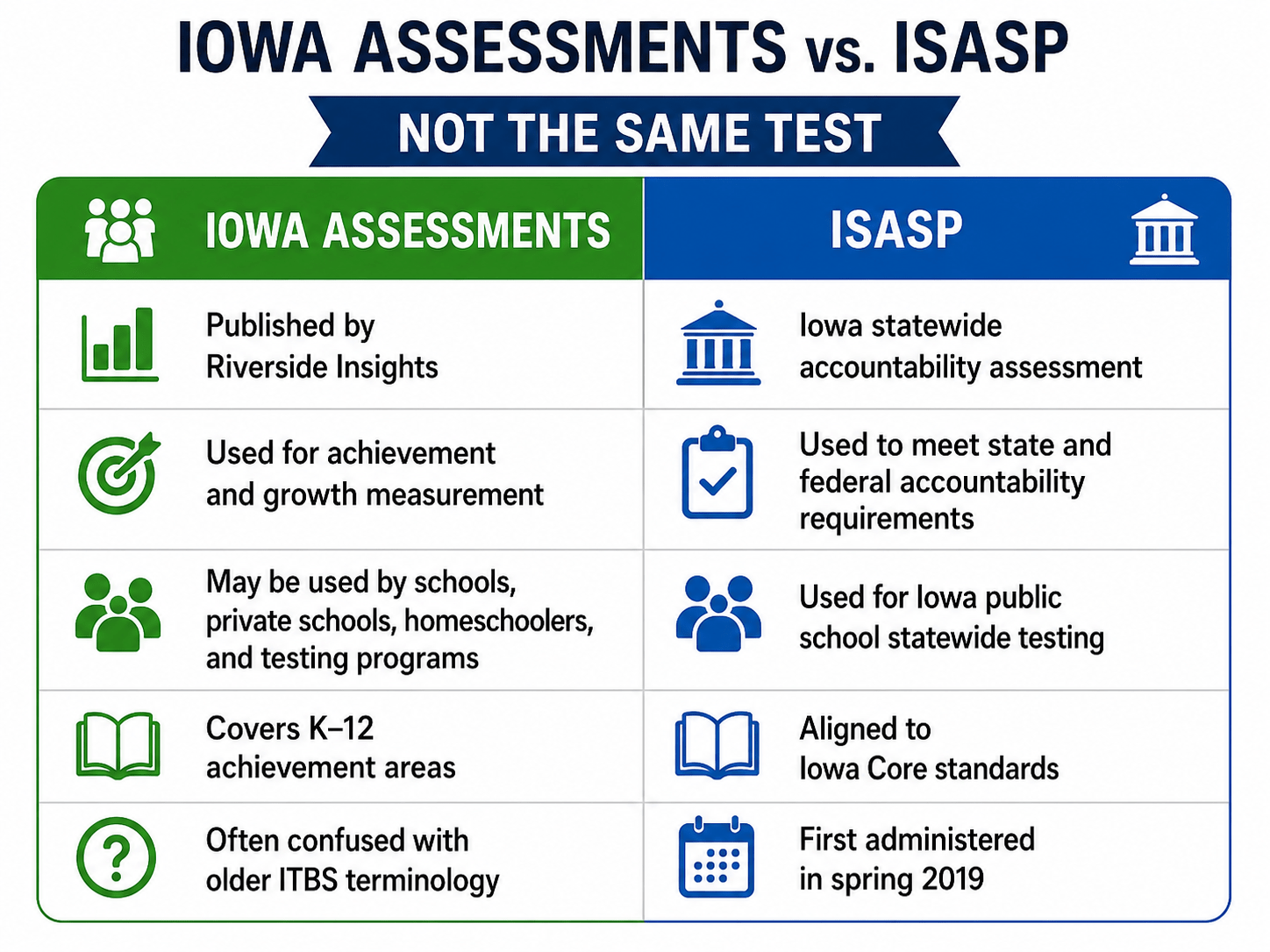
One important clarification: the Iowa Assessments are not the same as Iowa’s current statewide accountability test. Iowa public schools use the Iowa Statewide Assessment of Student Progress, or ISASP, for statewide accountability testing.
The Iowa Assessments may still be used by schools, private schools, homeschool families, and testing programs, but parents should confirm which test their child is taking before choosing prep materials.
Iowa Assessments vs. ISASP
What Are the Iowa Assessments?
The Iowa Assessments are achievement tests designed to measure how well students have learned important academic skills. They are used across grade levels from kindergarten through high school and can help schools and families understand a student’s academic strengths, weaknesses, and academic growth.
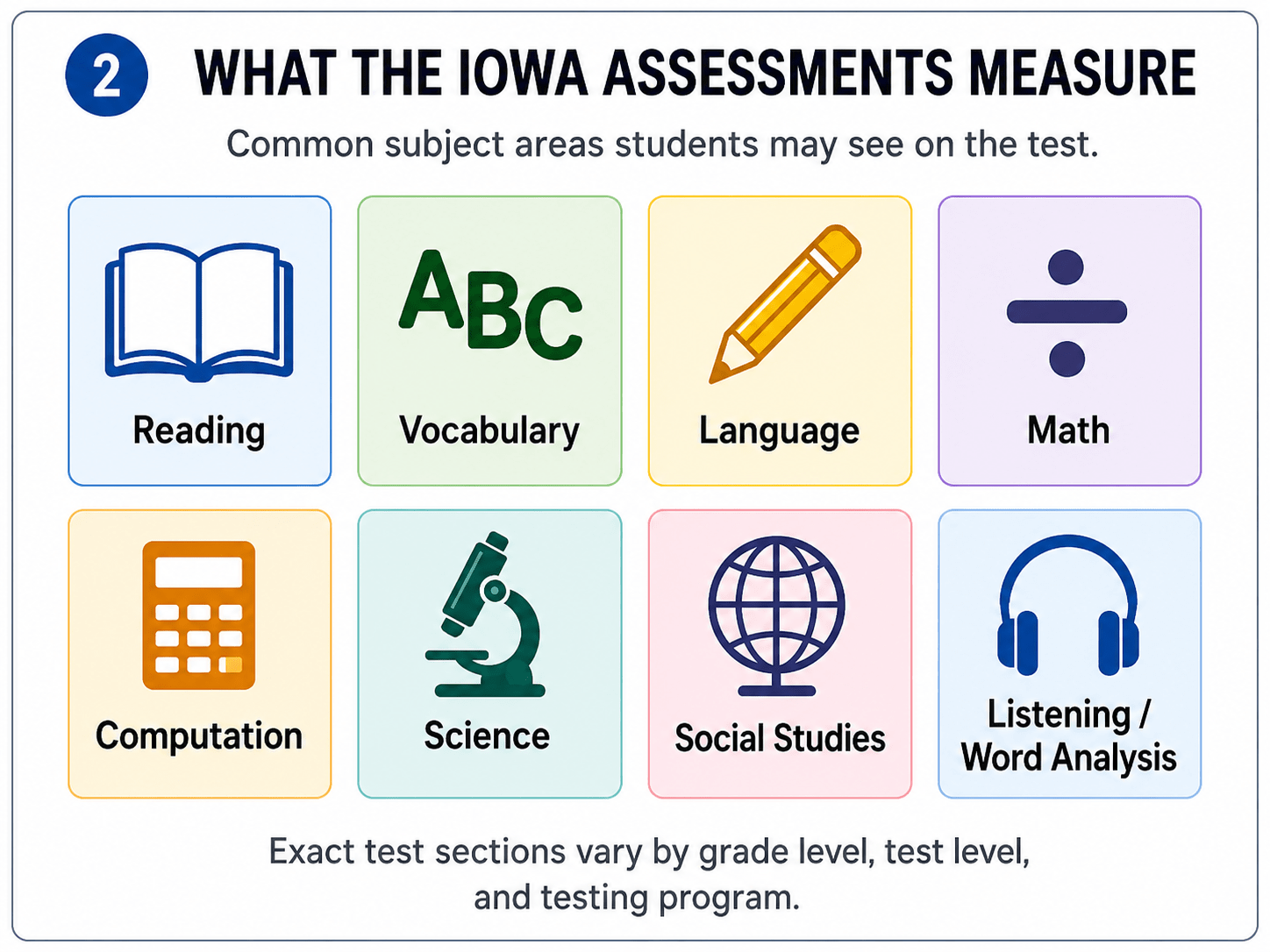
The tests may include areas such as reading, vocabulary, written language, mathematics, computation, science, and social studies. The exact subjects depend on the student’s grade level, test level, and testing program.
Schools may use Iowa Assessments results to guide instruction, identify skill gaps, monitor student growth, or compare student performance with national norms.
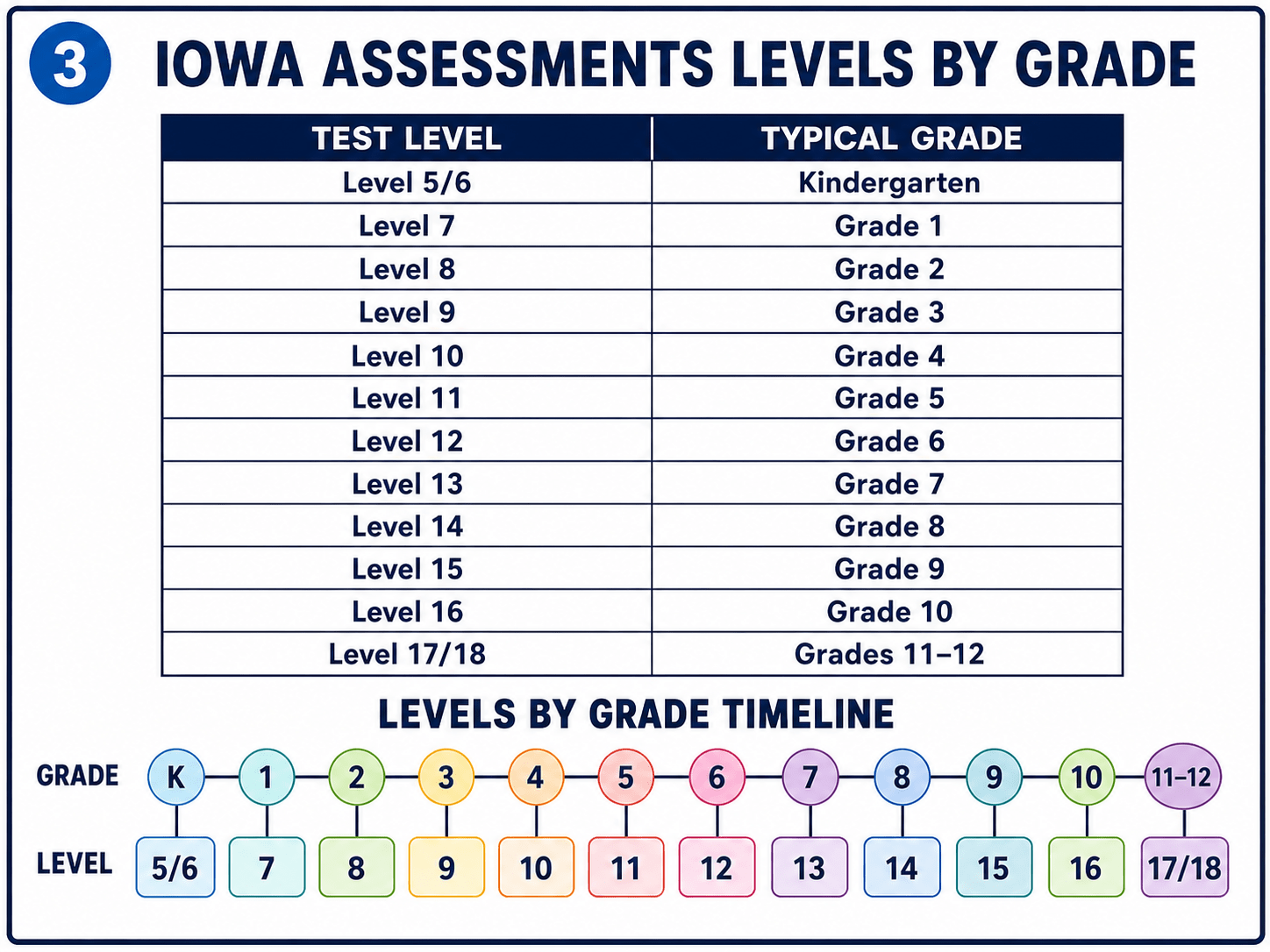
Iowa Assessments Levels by Grade
The Iowa Assessments are organized by test level, and each level generally corresponds to a grade range. Younger students take lower levels, while high school students take higher levels.
Because test administration can vary, students should always follow the level assigned by their school or testing provider.
IOWA Assessment Books & Flashcard Review
What Subjects Are on the Iowa Assessments?
The Iowa Assessments may include several academic areas depending on the student’s grade level and test level.
Common subjects include:
- Reading
- Vocabulary
- Language
- Mathematics
- Computation
- Science
- Social studies
- Listening
- Word analysis
Younger students may take more proctor-led sections, while older students may complete more self-paced sections. The exact format depends on the test level and testing program.
How Iowa Assessments Scores Work
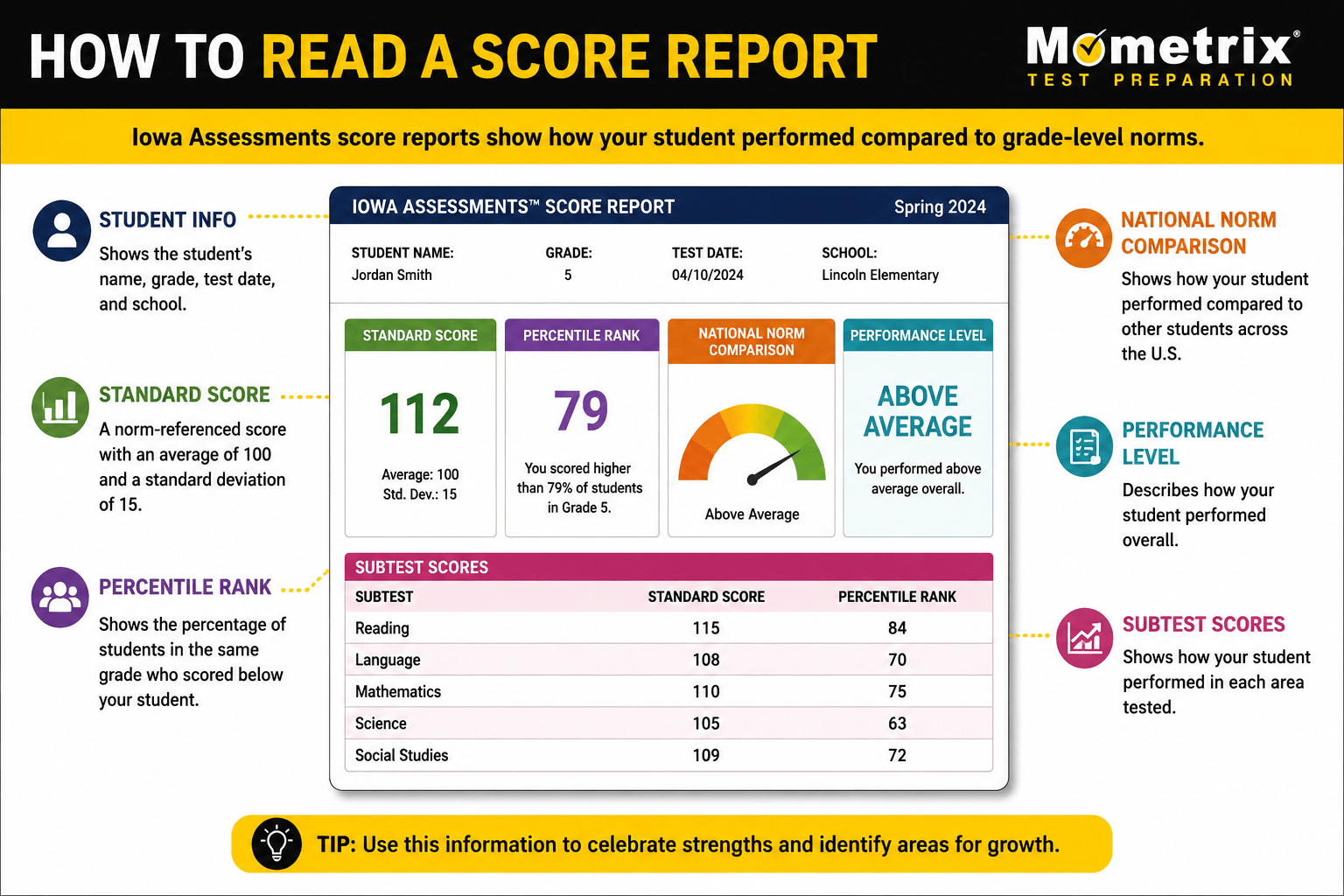
Iowa Assessments score reports can include several different score types. These scores help parents and educators understand student performance from more than one angle.
The most common score types include percentile scores, stanines, standard scores, grade equivalents, and growth-related measures.
A single score should not be treated as a complete picture of a student’s ability. Score reports are most useful when combined with classroom performance, teacher feedback, grades, and other assessments.
| Score Type | Plain-English Meaning |
|---|---|
| National Percentile Rank | Shows how a student performed compared with students in the national norm group. |
| Stanine | Places performance into a broad 1–9 range. |
| Standard Score | Helps track achievement and growth over time. |
| Grade Equivalent | Compares performance with typical grade-level patterns, but should not be read as literal grade placement. |
| Normal Curve Equivalent | A normalized score often used for reporting and comparisons. |
How to Read a Score Report
How to Prepare for the Iowa Assessments
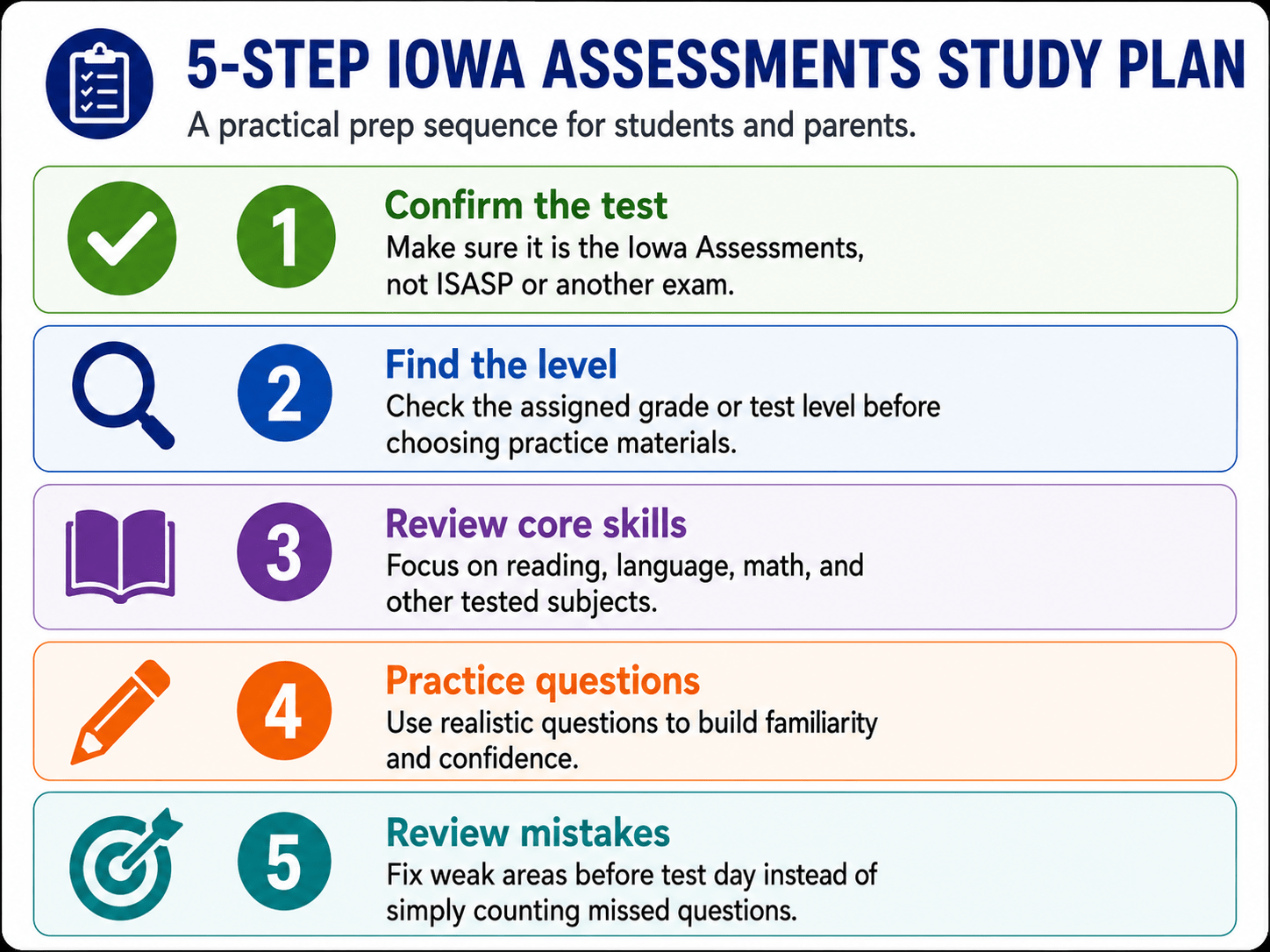
The best way to prepare for the Iowa Assessments is to build academic confidence before test day. Because the test measures broad achievement, students should focus on reviewing core skills, practicing test-style questions, and learning how to manage time.
Students should begin by confirming their test level and subject areas. From there, they can review reading comprehension, vocabulary, language, math, computation, science, and social studies as needed.
Practice questions are most helpful when students review their mistakes. Instead of simply checking whether an answer was right or wrong, students should ask:
- What skill was being tested?
- Why was my answer wrong?
- Why does the correct answer work?
- What can I do differently next time?
This is where many weak prep articles fail. They tell students to “practice,” but they do not explain how to practice correctly. The review process is where improvement actually happens.
Iowa Assessments Test-Day Tips
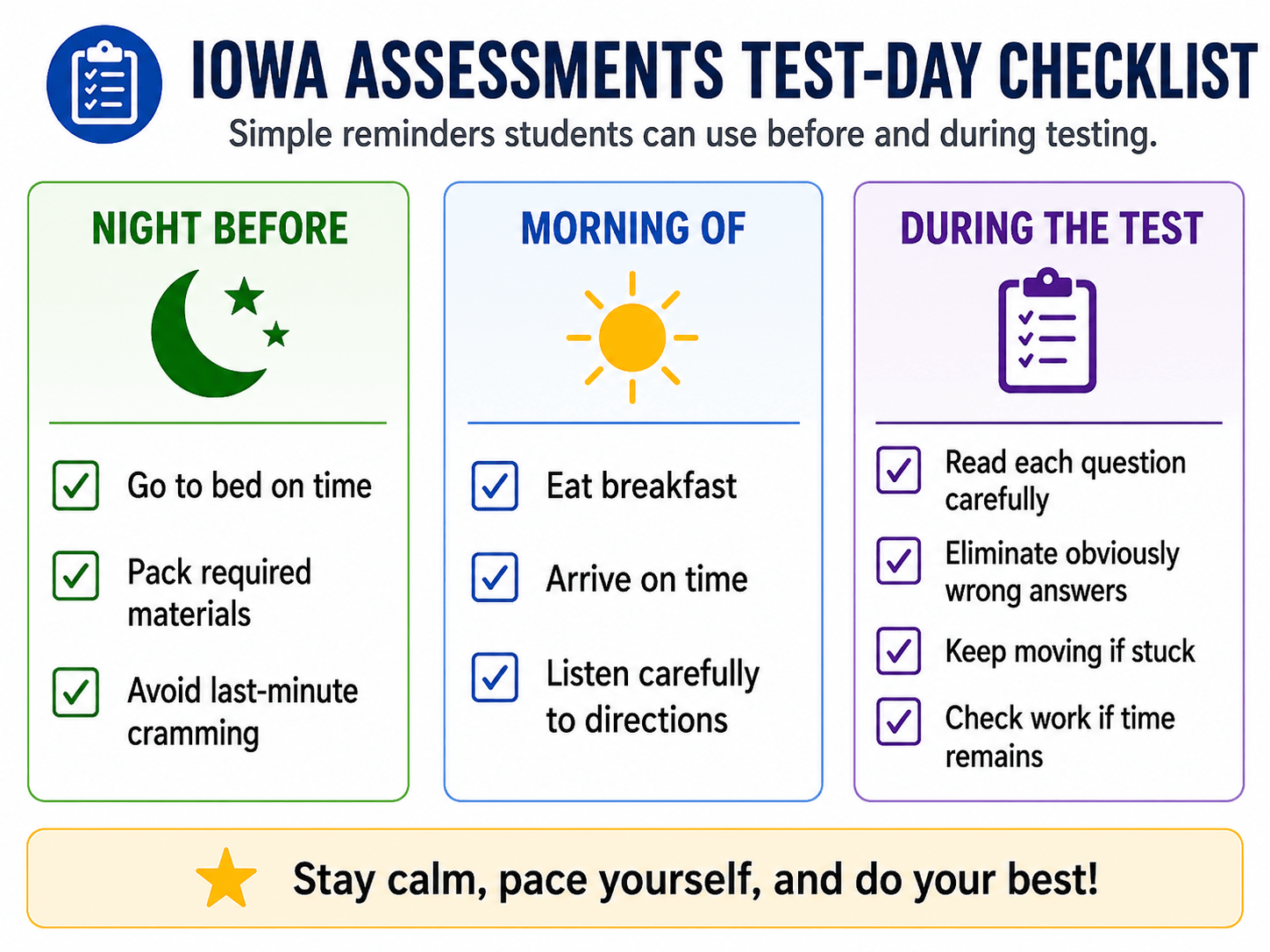
On test day, students should focus on staying calm, reading directions carefully, and using their time wisely. The goal is not to be perfect on every question. The goal is to show what they know.
Before the test, students should get enough sleep, eat a normal breakfast, and bring any materials required by the school or testing provider.
During the test, students should answer the questions they understand, avoid spending too long on one item, and check their work if time allows.
Parents can help by keeping the test in perspective. Iowa Assessments scores can provide useful information, but they are only one part of a student’s academic picture.
Frequently Asked Questions
Are the Iowa Assessments the same as the ITBS?
Not exactly. Many people still use “ITBS” to refer to Iowa testing, but the Iowa Assessments are the more current achievement test series. The older name, Iowa Test of Basic Skills, is still commonly used informally.
Are the Iowa Assessments the same as ISASP?
No. The Iowa Assessments and ISASP are different tests. The ISASP is Iowa’s statewide accountability assessment, while the Iowa Assessments are a separate achievement and growth assessment used by schools and testing programs.
What subjects are on the Iowa Assessments?
Subjects may include reading, vocabulary, language, math, computation, science, social studies, listening, word analysis, and other skills depending on grade level and test level.
How should students prepare?
Students should confirm their test level, review core academic skills, practice test-style questions, and spend time reviewing mistakes.
What is a good Iowa Assessments score?
There is no single “good” score for every student. Scores should be interpreted based on the student’s grade level, testing purpose, past performance, and the specific score type being reviewed.
Do all students take the same Iowa Assessments sections?
No. Test sections can vary based on grade level, test level, school, and testing program. Parents should confirm the assigned test level and subjects before choosing study materials.
Final Thoughts
The Iowa Assessments can provide useful information about a student’s academic strengths, weaknesses, and growth over time. The most important first step is making sure you know which test the student is taking.
If the student is taking the Iowa Assessments, focused review, realistic practice questions, and strong test-day habits can help them feel more confident and perform closer to their true ability.
For students preparing for the Iowa Assessments, choose the correct grade level, review the subjects that will be tested, and use practice questions to identify weak areas before test day.
